

Quick answer: An RCCB (residual current circuit breaker) usually trips when it detects an imbalance between outgoing and returning current—often because some current is leaking to earth. Moisture, damaged insulation, faulty appliances, neutral-to-earth connections, incorrect wiring, and cumulative leakage are common causes. Do not repeatedly reset, bypass, or upsize an RCCB to stop nuisance trips. Isolate the affected circuit and arrange qualified testing if the cause is not immediately obvious.
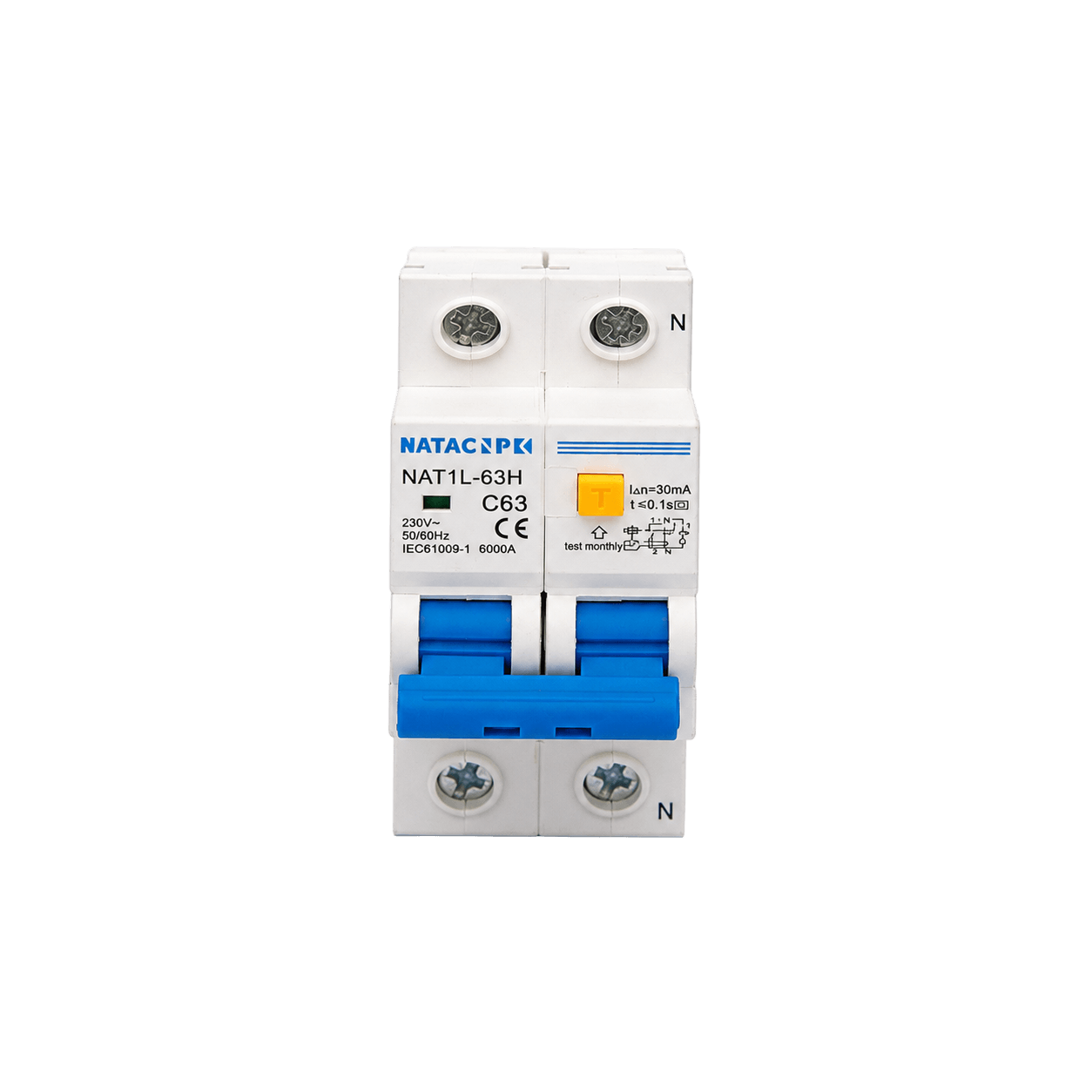
What does an RCCB do—and what does it not do?
An RCCB compares current in the live conductor(s) with current returning through the neutral. If the difference exceeds its operating threshold under specified conditions, it disconnects the circuit. This helps reduce risks from earth-leakage faults. A standard RCCB does not itself provide overload or short-circuit protection; it normally needs coordinated overcurrent protection such as an MCB. An RCBO combines residual-current and overcurrent protection in one device. Product markings and manufacturer documentation—not appearance alone—determine which function a particular unit provides.
12 reasons an RCCB keeps tripping
- Water or moisture ingress: Wet sockets, outdoor junction boxes, pump motors and exposed wiring can create earth leakage, especially after rain.
- Faulty appliance insulation: Water heaters, washing machines, refrigerators and other equipment can develop insulation faults.
- Damaged cable: Crushed, drilled, overheated or deteriorated cable insulation can leak current to earth.
- Neutral-to-earth connection downstream: An unintended connection after the RCCB can cause trips when loads operate.
- Shared or crossed neutrals: Neutrals from different protected circuits or devices may create imbalance.
- Accumulated normal leakage: Multiple electronic devices with filters may together approach the device's trip threshold.
- Faulty heating element: Electric geysers, ovens and immersion heaters can develop leakage as insulation ages.
- Outdoor lighting faults: Water inside fittings, garden cables or poorly sealed connections may cause intermittent trips.
- Motor or pump insulation failure: Moisture and winding deterioration can produce leakage during startup or operation.
- Incompatible device type: Some electronic loads and inverter equipment require a residual-current device of a specific type under the equipment manufacturer's instructions and applicable standards.
- Incorrect installation or circuit design: Wrong neutral routing, miswired protection and poor coordination can lead to repeated trips.
- Defective or aged RCCB: The device itself can fail, but this should be concluded only after proper circuit and appliance testing.
What to do when your RCCB trips: a safe decision path
If there is a burning smell, sparking, visible water inside electrical equipment, or a shock incident, keep clear and seek urgent professional assistance. Never remove the earth connection, bridge the RCCB, or substitute a larger trip sensitivity merely to keep power on.
Why does an RCCB trip when the water heater, washing machine or pump starts?
A trip associated with a particular appliance is a useful symptom, not a diagnosis. Heating elements and motor windings can leak current to earth, and wet wiring can worsen the problem. A qualified electrician can inspect the appliance and use appropriate insulation-resistance, leakage-current and protective-device tests. Testing methods must follow the equipment manufacturer's instructions; some electronics require special precautions before insulation testing.
RCCB trips after rain: what should be checked?
Outdoor sockets, solar-related auxiliary circuits, rooftop equipment, pump connections and garden lighting are common locations to investigate. A professional should identify moisture paths, damaged enclosures, unsuitable cable glands or degraded insulation and repair the installation to the required ingress-protection and wiring standards. Simply drying the area may not fix damaged insulation.
RCCB vs RCBO vs MCB: which protection do you need?
| Device | Earth-leakage protection | Overload / short-circuit protection | Typical purpose |
|---|---|---|---|
| RCCB | Yes | No, not by itself | Residual-current protection with separate overcurrent device |
| RCBO | Yes | Yes | Combined protection for a designated circuit |
| MCB | No | Yes | Overcurrent protection for a circuit |
For a fuller comparison, see RCCB vs RCBO, how to choose an MCB and the Shenzhen Nata RCCB/RCBO product family.
How to choose an RCCB or RCBO in Pakistan
When replacing or specifying protection, ask a qualified designer or electrician to confirm all of the following:
- Residual operating current (IΔn): For example, 30 mA is commonly used for additional personal protection in appropriate installations; the correct value depends on the application and applicable standards.
- Rated current (In): Must suit the circuit and protective coordination; this is not the leakage-trip sensitivity.
- Device type: AC, A, F or B as appropriate to the connected equipment, waveform and manufacturer instructions.
- Poles and system: Match single-phase or three-phase arrangements and neutral requirements.
- Short-circuit coordination: Verify the associated MCB/fuse, conditional ratings or RCBO breaking capacity.
- Supply and environment: Voltage, frequency, enclosure, humidity and operating conditions.
- Standards and documentation: Request the exact product datasheet, relevant test evidence and local code compliance.
Buyer checklist: information to send Shenzhen Nata
To obtain an accurate product recommendation or bulk quotation, share the existing device model and label photo, supply voltage, number of poles, circuit/load description, required rated current and IΔn, required device type, quantity, delivery city in Pakistan, and any project specification. For distributors and contractors, include the anticipated monthly or carton quantity.
Frequently asked questions
Why does my RCCB trip even when all appliances seem switched off?
Fixed wiring, outdoor circuits, permanently connected equipment, neutral-to-earth faults or cumulative leakage may still be involved. A qualified electrician should isolate and test the installation safely.
Can I replace a 30 mA RCCB with a 100 mA RCCB to stop tripping?
Do not change sensitivity to hide a fault. Different sensitivities serve different protection purposes, and replacing a 30 mA device can remove intended additional personal protection. A qualified professional must assess the design and applicable rules.
Does an RCCB trip because of an overload?
A standard RCCB is not an overload protective device. Overload or short-circuit faults should be handled by appropriately coordinated MCBs or fuses; an RCBO combines these functions with residual-current protection.
What is the difference between RCCB and RCBO?
RCCB detects residual-current imbalance, while RCBO adds overload and short-circuit protection. See the detailed RCCB vs RCBO guide.
Can solar inverters cause RCCB tripping?
Inverter installations can involve leakage currents and waveform characteristics that affect residual-current protection. Device selection must follow the inverter manufacturer's guidance and applicable electrical standards; not every RCCB type is suitable for every inverter.
Need RCCB or RCBO protection for your project?
Explore Shenzhen Nata's product range and request exact model specifications, availability and a quotation for Pakistan or international B2B supply.
Explore RCCB / RCBO Products Request a QuotationRelated reading: RCCB vs RCBO · MCB vs MCCB · Solar DC MCB sizing · All electrical guides.
Safety note: This article is general educational guidance, not a wiring diagram, diagnostic authorization or substitute for local electrical codes and competent inspection. Electrical troubleshooting may involve lethal voltages; testing and repairs belong to qualified personnel.