

Electrical equipment can be affected by several different power-quality problems, but a voltage protector, a voltage stabilizer and an SPD do not perform the same job. This guide explains the differences and shows where each device fits in a practical protection system.
Quick Comparison: Voltage Protector vs Stabilizer vs SPD
| Device | Main Function | What It Does |
|---|---|---|
| Voltage Protector | Sustained abnormal-voltage protection | Disconnects the load when voltage becomes too high or too low |
| Voltage Stabilizer | Voltage regulation | Adjusts incoming voltage to provide a more stable output within its operating range |
| SPD | Transient surge protection | Limits or diverts short-duration surge energy |
What Is a Voltage Protector?
A voltage protector monitors the incoming supply and disconnects the connected circuit when voltage moves above or below configured limits. Once the supply returns to an acceptable range, many models can reconnect after a selected recovery delay.
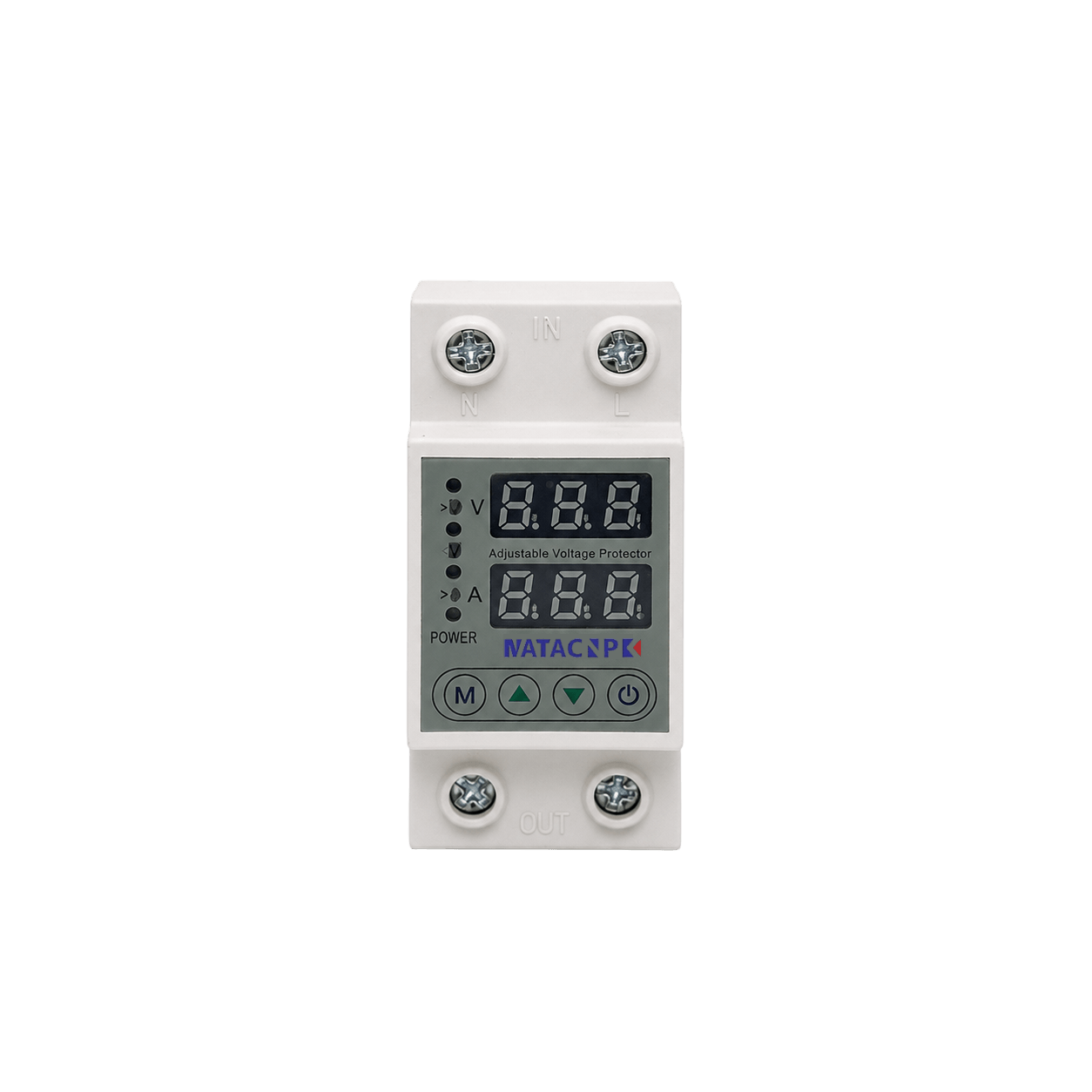
Original Shenzhen Nata product image.
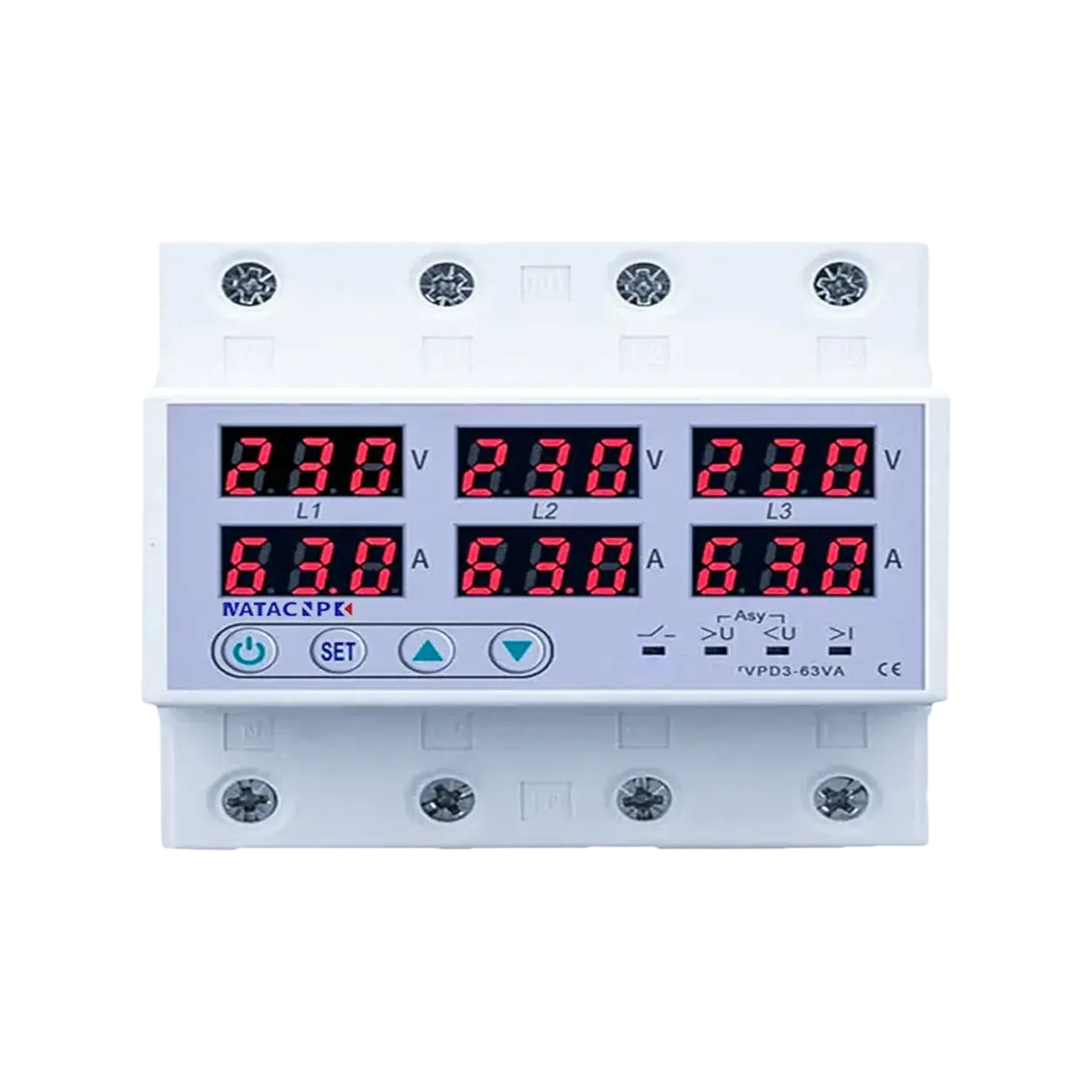
Original Shenzhen Nata product image.
Shenzhen Nata lists both 63A and 63A 4P adjustable voltage protectors. The current product specifications include an adjustable over-voltage range of AC230V–300V, an under-voltage range of AC140V–210V and a recovery-time range of 0.1–300 seconds. See the Voltage Protector product page for current specifications and pricing.
What Is Over-Voltage?
Over-voltage occurs when the supply rises above the normal operating range expected by connected equipment. Sustained excessive voltage can place stress on electronic power supplies, lighting, motors, appliances and control equipment. A voltage protector can disconnect the circuit when the supply exceeds the configured upper threshold.
What Is Under-Voltage?
Under-voltage occurs when supply voltage falls below the level required for normal operation. Motors, pumps, air conditioners, refrigerators and compressors can be particularly sensitive to prolonged low-voltage conditions. A voltage protector can disconnect the load when voltage drops below the configured threshold.
What Is a Voltage Stabilizer?
A voltage stabilizer performs a different job. Instead of simply disconnecting the load when incoming voltage is unsuitable, a stabilizer attempts to correct or regulate the voltage within its designed operating range so connected equipment can continue operating.
Voltage Protector vs Voltage Stabilizer
- Voltage Protector: monitors voltage and disconnects when it moves outside configured limits.
- Voltage Stabilizer: regulates voltage and attempts to maintain a more stable output.
What Is an SPD?
SPD stands for Surge Protection Device. An SPD is designed primarily to protect electrical systems against short-duration transient overvoltages caused by events such as switching operations and lightning-related electrical disturbances. It does not normally provide the same function as an adjustable over/under-voltage protector or a voltage stabilizer.
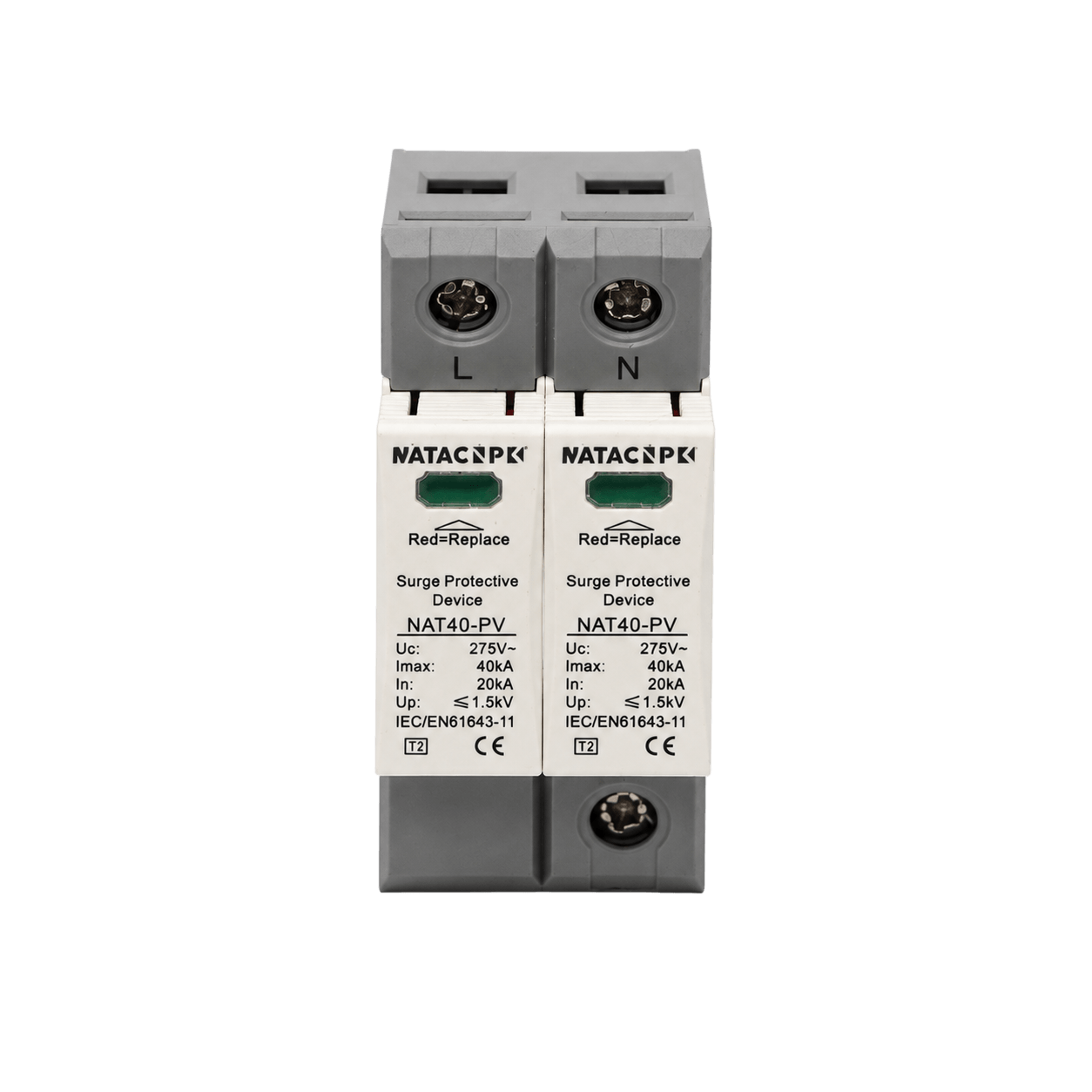
Voltage Protector vs SPD
A voltage protector responds to sustained abnormal supply voltage, while an SPD is intended to limit very short transient overvoltages. If mains voltage remains too high for a sustained period, an adjustable voltage protector may disconnect the load. If a brief transient surge appears on the system, an SPD is the device designed to limit that event.
Stabilizer vs SPD
A stabilizer continuously regulates voltage within its designed range. An SPD limits transient surge energy. A stabilizer should therefore not automatically be considered a replacement for surge protection, and an SPD does not regulate normal mains voltage.
Do You Need Both a Voltage Protector and SPD?
In many installations, the devices can complement each other because they address different problems. A simplified protection concept may include main overcurrent protection, surge protection, voltage monitoring and downstream final-circuit protection.
This is a simplified illustration only. Final device selection and placement should follow the electrical design, earthing arrangement, applicable standards and manufacturer instructions.
What About MCB and MCCB?
MCBs and MCCBs primarily provide overcurrent protection against overload and short circuit. They do not automatically replace an SPD, a voltage protector or residual-current protection.
What About RCCB and RCBO?
RCCBs and RCBOs are associated with residual-current protection. An RCBO combines residual-current protection with overcurrent protection. Again, this is a different role from voltage protection and surge protection.
Which Device Protects Against Which Problem?
| Electrical Problem | Typical Protection |
|---|---|
| Circuit overload | MCB / MCCB / RCBO as applicable |
| Short circuit | MCB / MCCB / RCBO as applicable |
| Residual / earth leakage current | RCCB / RCBO |
| Sustained over-voltage | Voltage protector |
| Sustained under-voltage | Voltage protector |
| Voltage variation requiring regulation | Voltage stabilizer |
| Transient surge | SPD |
Voltage Protection for Homes in Pakistan
For homes affected by voltage fluctuation, protection may involve correctly selected MCBs, residual-current protection where required, surge protection, over/under-voltage protection, proper earthing and correct cable sizing. Rather than relying on one device, the objective should be a coordinated electrical protection system.
Voltage Protection for Shops and Offices
Computers, networking equipment, CCTV systems, refrigeration, air conditioners, POS systems and lighting controls can all be affected by poor supply conditions. A voltage protector can disconnect circuits during sustained abnormal voltage, while an SPD can provide additional protection against transient events.
Voltage Protection for Industrial Applications
Industrial systems may contain motors, contactors, PLCs, drives, pumps, compressors and control panels. Protection can involve MCCBs, motor protection, phase monitoring, contactors, SPDs and voltage-monitoring devices. Selection should be based on the project design and expected operating conditions.
Voltage Protection for Solar Systems
Solar installations may contain both AC and DC sections. Protection can include DC circuit breakers, DC fuse protection, DC/AC SPDs, AC circuit breakers and suitable voltage monitoring. Each device must be rated for its intended AC or DC application.
63A Voltage Protector: What Does 63A Mean?
A 63A marking indicates the rated current specified for the device. It does not mean every home or business should automatically use a 63A protector. Selection must consider expected load current, supply configuration, cable rating, upstream protection, pole configuration and manufacturer requirements.
What Is Recovery Time?
After an abnormal-voltage event, immediately reconnecting some equipment may not be desirable. A recovery or reconnection delay allows the supply to stabilize before reconnecting the load. Shenzhen Nata's adjustable voltage protectors currently list a configurable recovery-time range of 0.1–300 seconds.
Common Mistakes When Choosing Voltage Protection
- Assuming an SPD protects against every voltage problem.
- Assuming a voltage protector regulates voltage continuously.
- Replacing an MCB with a voltage protector.
- Choosing only by ampere rating.
- Ignoring earthing and bonding requirements.
- Ignoring manufacturer installation instructions.
Frequently Asked Questions
Is a voltage protector the same as a stabilizer?
No. A voltage protector normally disconnects the supply when voltage moves outside configured limits, while a stabilizer attempts to regulate the output voltage.
Is an SPD the same as a voltage protector?
No. An SPD is designed mainly for short-duration transient surge protection, while a voltage protector monitors sustained high or low supply voltage.
Do I need an SPD if I already have a voltage protector?
Possibly. They protect against different electrical conditions, so requirements depend on the installation design, risk assessment and applicable standards.
Can a voltage protector protect an air conditioner?
A correctly selected voltage protector may disconnect an air-conditioner circuit during sustained abnormal supply voltage. The device rating and restart delay must be suitable for the equipment and installation.
Does a voltage protector replace an MCB?
No. An MCB primarily protects against overload and short circuit, while a voltage protector monitors abnormal supply voltage.
Does an SPD protect against low voltage?
No. An SPD is not a low-voltage protection or voltage-regulation device.
Which Device Should You Choose?
- Sustained high or low voltage: consider a voltage protector.
- Voltage needs continuous correction: consider a voltage stabilizer.
- Transient surges: use an appropriate SPD.
- Overload or short circuit: use an appropriate circuit breaker.
- Residual / earth leakage: use suitable residual-current protection.
Shenzhen Nata Electrical Protection Solutions
Explore original Shenzhen Nata voltage protectors, surge protection devices, MCBs, MCCBs and related electrical protection products for Pakistan and international B2B markets.
View Voltage Protectors View SPDs Visit Shop