

Single Pole vs Double Pole vs Four Pole MCB – Which One Should You Use?
MCBs are available with different numbers of poles, and choosing between a 1P, 2P or 4P breaker is not simply a matter of physical size. The correct pole configuration depends on the electrical supply, the conductors that must be switched or protected, and the installation design.
This Shenzhen Nata guide explains the practical difference between single pole, double pole and four pole MCBs, with examples from the current Shenzhen Nata AC MCB range for homes, shops, commercial buildings and three-phase distribution systems in Pakistan.
Quick Comparison: 1P vs 2P vs 4P MCB
| MCB Type | Poles Operated Together | Typical Use | Shenzhen Nata Example |
|---|---|---|---|
| 1P / Single Pole | 1 | Suitable single-phase branch circuits | NAT1-63H 1P C10 / C16 / C20 |
| 2P / Double Pole | 2 | Single-phase circuits requiring two-pole isolation | NAT1-63H 2P C63 |
| 4P / Four Pole | 4 | Suitable three-phase + neutral distribution | NAT1-63H 4P C63 |
What Does “Pole” Mean in an MCB?
A pole is an electrically switched path inside the circuit breaker. When a multi-pole MCB trips or is switched OFF, its linked poles operate together. This makes it possible to disconnect the conductors required by the particular system design in one coordinated action.
The number of poles does not tell you the current rating, breaking capacity or trip curve. Those specifications must be checked separately.
What Is a Single Pole MCB?
A single pole MCB (1P MCB) operates one pole. It is widely used for suitable single-phase final or branch circuits such as lighting and general distribution circuits, depending on the local wiring arrangement and design requirements.
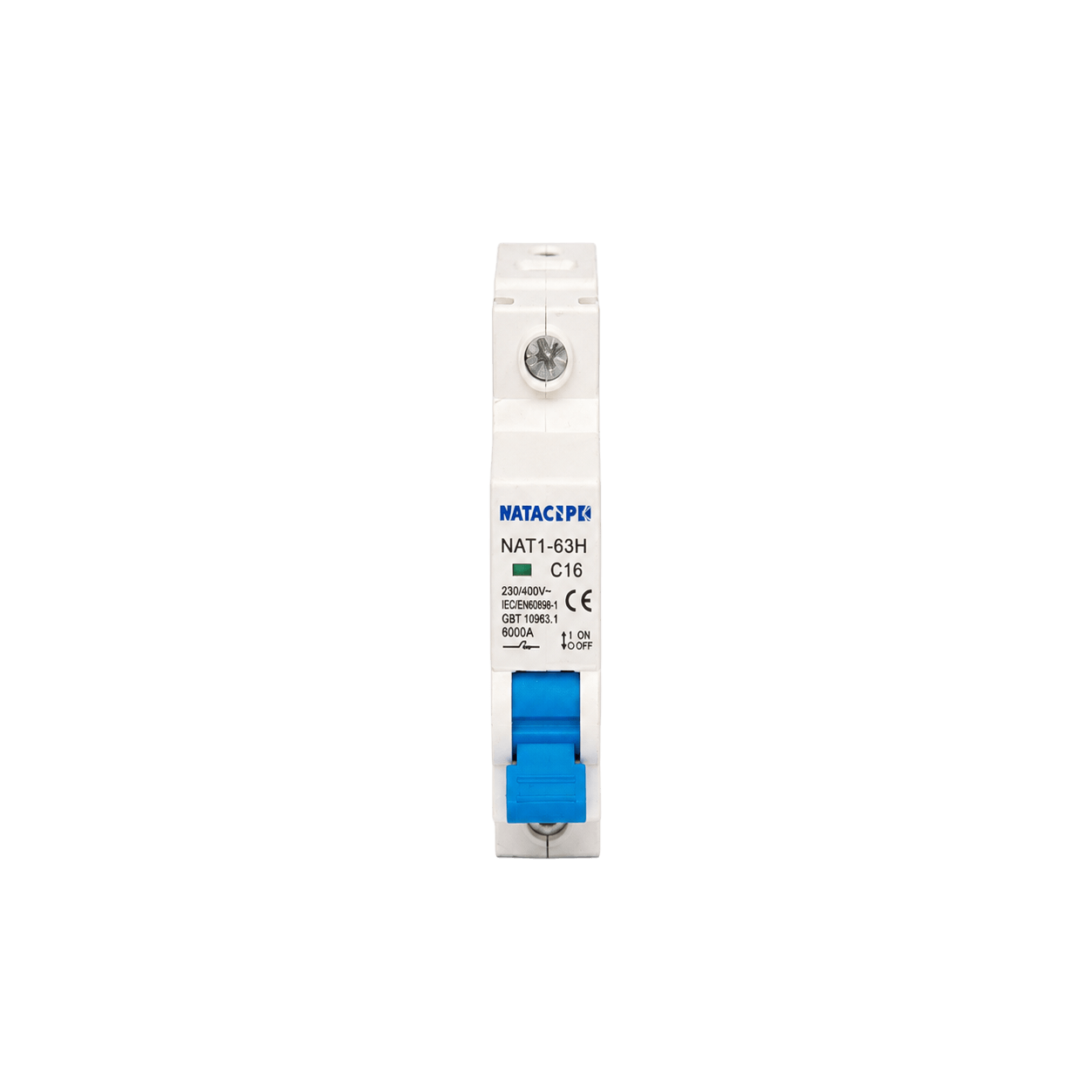
Shenzhen Nata currently lists NAT1-63H single-pole AC MCBs in C10, C16 and C20. The product pages list C-curve operation, 230/400V AC and 6000A breaking capacity for these variants.
Where is a 1P MCB commonly used?
Typical applications can include residential lighting circuits, socket circuits where the electrical design permits, small commercial branch circuits and distribution-board outgoing ways. The exact breaker rating must still coordinate with the cable, load and fault level.
What Is a Double Pole MCB?
A double pole MCB (2P MCB) has two mechanically linked poles that operate together. It is used where the circuit design requires simultaneous disconnection of two conductors.
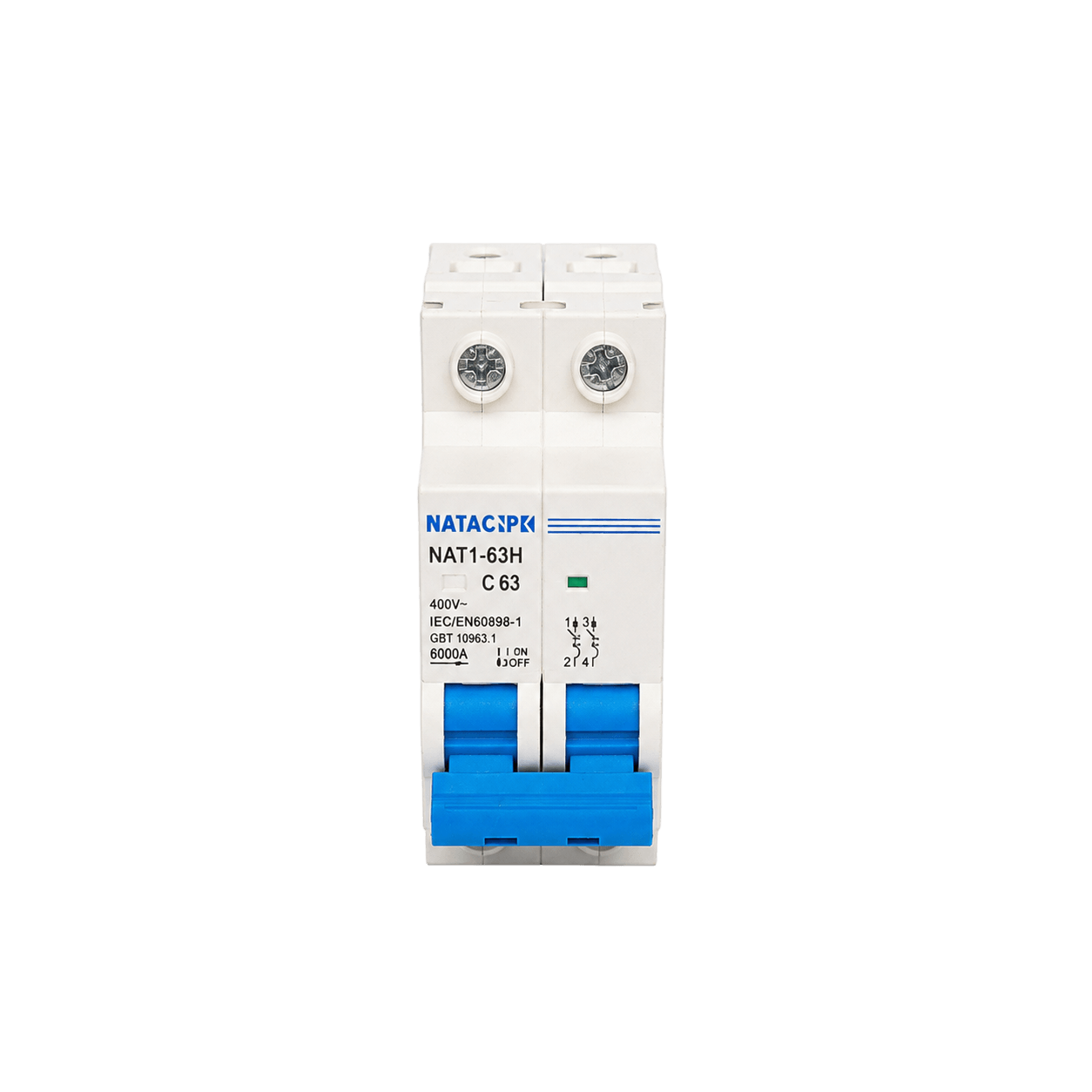
The current Shenzhen Nata double-pole product page lists the NAT1-63H 2P AC MCB C63 with C curve, 63A rated current, 400V AC and 6000A breaking capacity. It is positioned for residential, commercial and small industrial distribution applications requiring two-pole operation.
Why use a double pole breaker?
Where the installation requires two conductors to be disconnected together, a linked double-pole breaker provides coordinated operation rather than relying on two independent single-pole devices. The neutral-switching and protection arrangement must always follow the specific system and applicable electrical rules.
What Is a Four Pole MCB?
A four pole MCB (4P MCB) contains four linked poles. It is commonly associated with suitable three-phase systems that include a neutral conductor and require coordinated four-pole switching/protection.
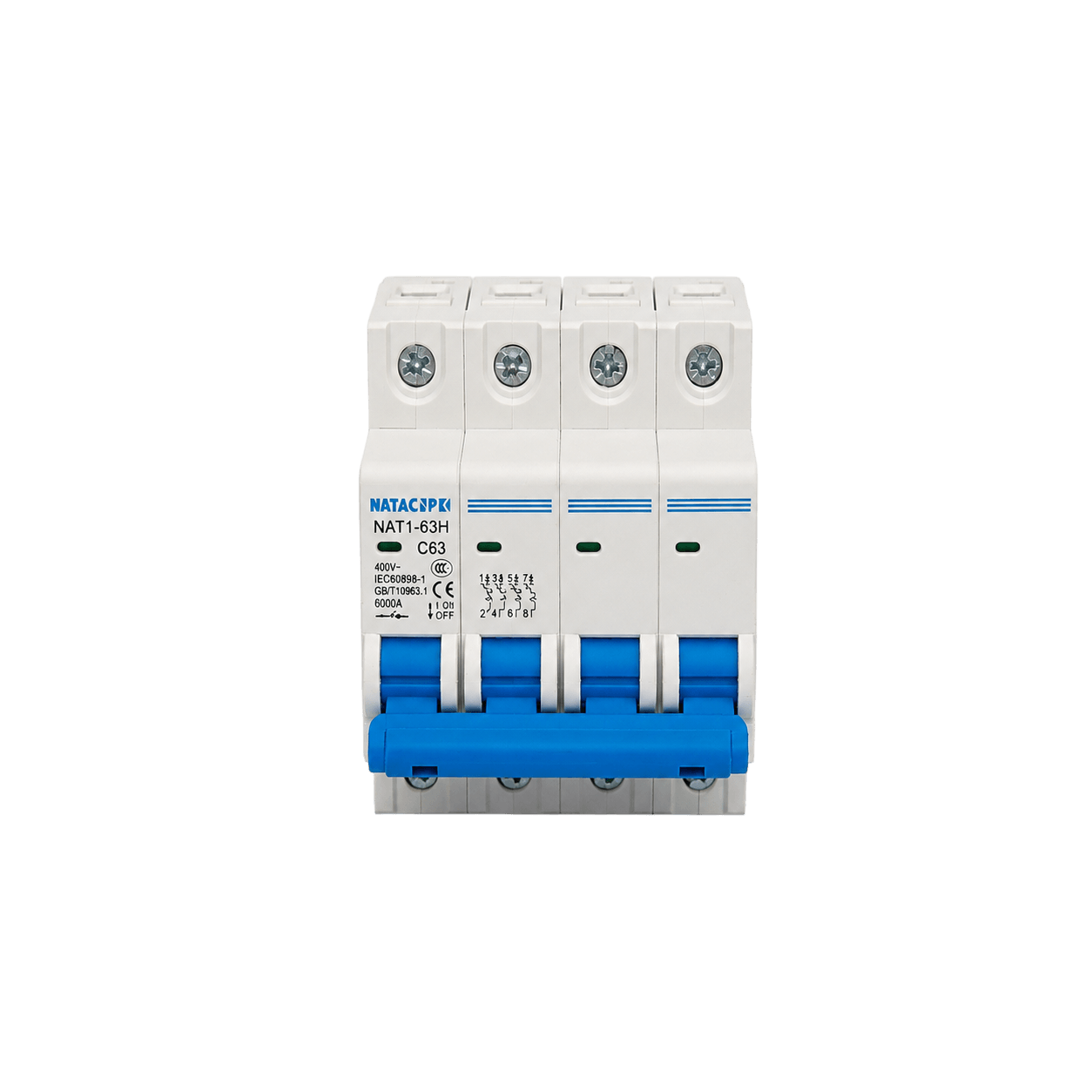
Shenzhen Nata currently lists the NAT1-63H 4P AC MCB C63 for three-phase distribution boards and commercial/industrial applications. The listed specifications include C curve, 63A rated current, 400V AC and 6000A breaking capacity.
Single Pole vs Double Pole MCB: Main Difference
The simplest difference is the number of conductors operated together. A single-pole MCB controls one pole, while a double-pole MCB controls two linked poles.
That does not mean a 2P breaker is a “stronger” version of a 1P breaker. The correct choice depends on the circuit configuration. For a suitable final branch circuit, a 1P MCB may be correct. For an incoming or dedicated single-phase circuit requiring two-pole isolation, a 2P breaker may be more appropriate.
Double Pole vs Four Pole MCB
A 2P MCB is normally associated with circuits requiring two linked poles. A 4P MCB is used where four linked poles are required, commonly in suitable three-phase plus neutral systems.
Does Pole Count Change the Ampere Rating?
No. Pole count and current rating are different specifications. A breaker can be single-pole or multi-pole and still be available in different current ratings.
For example, the current Shenzhen Nata range used in this article includes 1P C10/C16/C20 models and 2P/4P C63 models. You should not select a 63A breaker simply because you need more poles. The current rating must be suitable for the load and cable.
Does Pole Count Change Breaking Capacity?
Not by itself. Breaking capacity is a separate manufacturer rating describing the short-circuit current the breaker is designed to interrupt under specified conditions. Always verify the actual rating printed on the device or stated in its technical data.
Which MCB Is Used for a House?
Homes can use more than one pole configuration in the same distribution system. Individual branch circuits may use single-pole MCBs where appropriate, while an incoming or dedicated circuit may require double-pole switching. The correct arrangement depends on the supply system, local regulations, circuit design and required isolation.
Which MCB Is Used for Three-Phase Supply?
Three-phase installations can require multi-pole protection and switching. Where three phases plus neutral must be operated together, a 4P breaker may be used if it is suitable for the system and required by the design. Other three-phase arrangements can differ, so selection should be based on the actual distribution system rather than a general rule.
Can Two Single Pole MCBs Replace One Double Pole MCB?
Two unrelated single-pole breakers should not be assumed to provide the same coordinated operation as a purpose-designed linked double-pole breaker. If simultaneous disconnection is required, use an appropriately designed device or approved assembly according to the installation requirements.
Can a Four Pole MCB Be Used on Single Phase?
Do not improvise pole usage. A breaker should be installed only in configurations permitted by the manufacturer and the electrical design. Using unused or paralleled poles without verified technical instructions can create an incorrect or unsafe protection arrangement.
How to Choose Between 1P, 2P and 4P
- Identify the supply: single-phase or three-phase.
- Determine which conductors must be switched together: this drives the required pole configuration.
- Calculate the design current: choose an appropriate breaker rating for the load and conductor.
- Check breaking capacity: it must suit the prospective fault current at the installation point.
- Confirm trip curve: select a characteristic suitable for the load and inrush current.
- Verify voltage and standards: check the exact manufacturer data and applicable electrical requirements.
Shenzhen Nata 1P, 2P and 4P MCB Comparison
| Product | Rated Current | Voltage | Breaking Capacity | Typical Product Positioning |
|---|---|---|---|---|
| NAT1-63H 1P C10/C16/C20 | 10A / 16A / 20A | 230/400V AC | 6000A | Lighting, sockets and branch circuits |
| NAT1-63H 2P C63 | 63A | 400V AC | 6000A | Two-pole distribution and isolation |
| NAT1-63H 4P C63 | 63A | 400V AC | 6000A | Three-phase + neutral distribution |
These are current Shenzhen Nata product examples, not universal sizing recommendations. Always select the breaker from the actual circuit requirements.
MCB Pole Selection for Solar Systems
Solar installations can contain both AC and DC circuits. Do not apply AC pole-selection assumptions automatically to DC protection. DC systems require breakers specifically rated for the DC voltage, polarity/configuration and fault-interruption requirements. See the Shenzhen Nata DC MCB range for dedicated DC examples.
MCB vs MCCB: Is Pole Count the Main Difference?
No. MCB versus MCCB is a separate comparison involving application, current range, breaking capacity, trip adjustment and system role. Read our MCB vs MCCB guide for that comparison.
Frequently Asked Questions
What is the difference between single pole and double pole MCB?
A single-pole MCB operates one pole. A double-pole MCB operates two linked poles together and is used where two-pole disconnection is required by the circuit design.
When is a four pole MCB used?
A four-pole MCB is used in suitable systems requiring four linked poles, commonly three-phase plus neutral distribution arrangements.
Is a double pole MCB safer than a single pole MCB?
Not automatically. The safer choice is the correctly specified device for the circuit. Pole count, current rating, breaking capacity, wiring arrangement and applicable regulations must all be correct.
Can I replace a 1P MCB with a 2P MCB?
Only if the electrical design, enclosure, wiring and manufacturer requirements support that change. The pole count should not be changed casually.
What does 4P mean on a circuit breaker?
4P means the breaker contains four linked poles that operate together.
Which MCB is better for three-phase systems?
There is no universal answer. The correct number of poles depends on whether the neutral must also be switched/protected and on the system design and applicable requirements.
Choose the Right Shenzhen Nata MCB
Explore original Shenzhen Nata single-pole, double-pole and four-pole AC MCBs for residential, commercial, panel-building and project applications in Pakistan.
View 1P MCBs View 2P MCB View 4P MCB Visit Shop